Tuesday, December 03, 2013


Saturday, November 19, 2011
AIIMS Pre-PG 13 November 2011 Forensic Medicine
1- Stack Formula is used to estimate age through dentition is for..
a. infants
b. adults 25-50yrs
c. adult >50yr
d. elderly
Explanation : (Click on Picture to enlarge view )

2. DNA Is best obtained from autopsy from which organ.
a) Liver
b) Kidney
c) Brain
d) Spleen
Update ( 7 December 2011 ) : After discussion with some of the senior professors of Forensic Medicine, who confirmed that the answer key likely considered Spleen as the answer and cited the following reference from Post mortem technique handbook By Michael T. Sheaff, Deborah J. Hopster. ( Going by the Golden principle : Examiners are always right..I'm revising the answer from Brain to Spleen )

In the spirit of scientific temperament, please go through the 'Contradictory Reference' which points towards Brain Cortex : " With blood samples, a good HMWDNA recovery from all the bodies investigated was obtained during the first week following the death. In each case, the quality and quantity of the DNA were good enough to realize DNA fingerprints with the SLP system (data not shown). In liver samples, only bodies of postmortem ages ranging from 1 to 7 days allowed us to obtain HMWDNA. HMWDNA was extracted from kidney samples up to one month after death, but the yield of DNA decreased rapidly, becoming very low beyond a period of one week. Past this period, we did not succeed in obtaining DNA fingerprints from DNA extracted. The extraction of DNA from lymph nodes was satisfactory up to one week. Over a postmortem period of 7 days, the DNA was degraded and unsuitable for blotting. HMWDNA was purified from spleen samples up to one week after death and the DNA present in heart tissue or in muscle cells was stable up to one month postmortem period, allowing us to perform DNA fingerprinting. Finally, out of all tissues tested, the brain cortex appeared to be the most stable tissue for DNA recovery, even after long postmortem periods." Source : http://
(Click on Picture to enlarge view )

3. Palate print commonly taken from :
a. anterior part of palate
b. lateral wall of palate
c. medial wall of palate
d. posterior palate
 Study of the laterally extended curved
ridges (Rugae) and the grooves on the anterior
part of the palate.
It is also known as ‘Rugoscopy'
Palates have got various characteristics like placed
high up or low, broad or narrow. peculiarities of
the bony ridges and prominences.
Harrison Allen (1889) suggested the study of palate prints as a
method of identification.
Study of this method is advantageous because —
(1) Prints (ridge pattern) do not change during
growth.
(2) It is protected from trauma due to its
situation.
(3) It is protected from heat by bucal pad of
fat and tongue.
(4) Even in twins, the pattern of rugosities may
be similar but not identical.
Thomas and Kotze have classified palate
prints basing on the characteristic of the rugae as
follows -
(1) Primary rugae — 5 to 10 mm and 10 mm or
more.
(2) Secondary rugae — 3 to 5 mm.
(3) Fragmented rugae — Less than 3 mm.
Source: Karmakar's Forensic Medicine and Toxicology Page 385
Q4. Flaying seen in what type of lacerated wound ?
a. tear
b. shearing force
c. avulsion
d. pressure
Explanation : Reference K. Vij's FMT


Q. Giving False evidence under Oath is defined under section :
a) 151 IPC
b) 161 IPC
c) 181 IPC
d) 191 IPC
Q. maximum punishment to doctor under 304A................2year
:::Medico-legal Important Sections:::
Indian Penal Code
Offense Affecting Human Body
Sec 299 to Sec 377
• Sec 299 Culpable Homicide
• Sec 300 Murder
• Sec 302 Punishment of murder/infanticide*
• Sec 304 Culpable Homicide not amounting to murder
• Sec 304 A Causing death by negligence* ( punishment up-to 2yrs/fine )
• Sec 304 B Dowry Death
Sections Related to Criminal Abortion
• Sec 312 to Sec 316
Abandonment of Child under 12 years
• Sec 317
Concealment of birth
• Sec 318
Hurt
Sec 319
Grievous Hurt
• Sec 320
Assault
• Sec 351
Assault to Outrage the Modesty of Women
• Sec 354
Rape
Definition Sec 375
Punishment Sec 376
Criminal Procedure Code
Sec 174 Police Inquest
Sec 176 Magistrate’s Inquest
Indian Evidence Act
Sec 32 Dying Declaration
5 : 1st ossification centre appears at :
(Click on Picture to enlarge view )

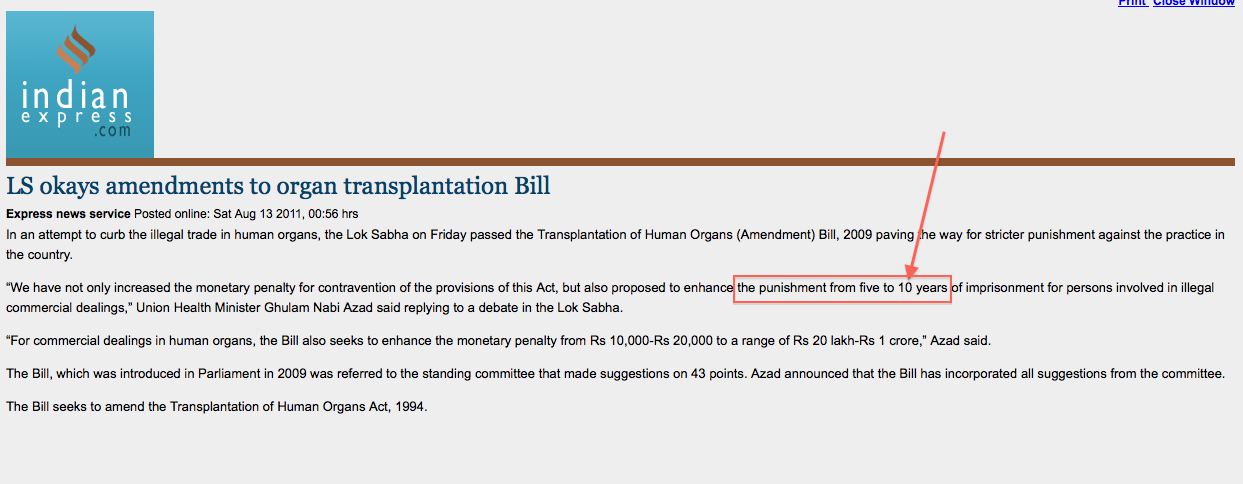
According to organ transplantation act 1994 what punishment for doctor if found guilt ?
1. 2 yrs
2. more than 5 yrs
3. 4 yrs
4. 2-5 yrs
These has been an amendment in Organ Transplantation act in August 2011( both Lok Sabha & Rajya Sabha passed the Bill ) , where the punishment has been made more severe between 5-10 years (Click on Picture to enlarge view )...Why answe should be 2. more than 5 yrs? Explanation : Why will the examiner suddenly ask about punishment, if there is NO recent development )

Q A chronic alcoholic - assaults neighbor - had quit drinking 4 days back - now has delirium tremens. He is :
A. Responsible for committing the crime
B. Not responsible under Sec 84 IPC
C. Partially responsible
D. Responsibility can't be fixed from the given history ( Click on Picture to enlarge view )

a. infants
b. adults 25-50yrs
c. adult >50yr
d. elderly
Explanation : (Click on Picture to enlarge view )

2. DNA Is best obtained from autopsy from which organ.
a) Liver
b) Kidney
c) Brain
d) Spleen
Update ( 7 December 2011 ) : After discussion with some of the senior professors of Forensic Medicine, who confirmed that the answer key likely considered Spleen as the answer and cited the following reference from Post mortem technique handbook By Michael T. Sheaff, Deborah J. Hopster. ( Going by the Golden principle : Examiners are always right..I'm revising the answer from Brain to Spleen )

In the spirit of scientific temperament, please go through the 'Contradictory Reference' which points towards Brain Cortex : " With blood samples, a good HMWDNA recovery from all the bodies investigated was obtained during the first week following the death. In each case, the quality and quantity of the DNA were good enough to realize DNA fingerprints with the SLP system (data not shown). In liver samples, only bodies of postmortem ages ranging from 1 to 7 days allowed us to obtain HMWDNA. HMWDNA was extracted from kidney samples up to one month after death, but the yield of DNA decreased rapidly, becoming very low beyond a period of one week. Past this period, we did not succeed in obtaining DNA fingerprints from DNA extracted. The extraction of DNA from lymph nodes was satisfactory up to one week. Over a postmortem period of 7 days, the DNA was degraded and unsuitable for blotting. HMWDNA was purified from spleen samples up to one week after death and the DNA present in heart tissue or in muscle cells was stable up to one month postmortem period, allowing us to perform DNA fingerprinting. Finally, out of all tissues tested, the brain cortex appeared to be the most stable tissue for DNA recovery, even after long postmortem periods." Source : http://
(Click on Picture to enlarge view )

3. Palate print commonly taken from :
a. anterior part of palate
b. lateral wall of palate
c. medial wall of palate
d. posterior palate
Study of the laterally extended curvedridges (Rugae) and the grooves on the anterior
part of the palate.
It is also known as ‘Rugoscopy'
Palates have got various characteristics like placed
high up or low, broad or narrow. peculiarities of
the bony ridges and prominences.
Harrison Allen (1889) suggested the study of palate prints as a
method of identification.
Study of this method is advantageous because —
(1) Prints (ridge pattern) do not change during
growth.
(2) It is protected from trauma due to its
situation.
(3) It is protected from heat by bucal pad of
fat and tongue.
(4) Even in twins, the pattern of rugosities may
be similar but not identical.
Thomas and Kotze have classified palate
prints basing on the characteristic of the rugae as
follows -
(1) Primary rugae — 5 to 10 mm and 10 mm or
more.
(2) Secondary rugae — 3 to 5 mm.
(3) Fragmented rugae — Less than 3 mm.
Source: Karmakar's Forensic Medicine and Toxicology Page 385
Q4. Flaying seen in what type of lacerated wound ?
a. tear
b. shearing force
c. avulsion
d. pressure
Explanation : Reference K. Vij's FMT


Q. Giving False evidence under Oath is defined under section :
a) 151 IPC
b) 161 IPC
c) 181 IPC
d) 191 IPC
Q. maximum punishment to doctor under 304A................2year
:::Medico-legal Important Sections:::
Indian Penal Code
- Sec 44 Injury
- Sec 84 Act of a person of unsound mind/McNaughtens Rule
- Sec 85 Act of a person who is intoxicated against will
- Sec 191 & sec 193 definition and Punishment of perjury(Punishment up-to 7yrs )
- Sec 197 Issuing or signing false certificate
Offense Affecting Human Body
Sec 299 to Sec 377
• Sec 299 Culpable Homicide
• Sec 300 Murder
• Sec 302 Punishment of murder/infanticide*
• Sec 304 Culpable Homicide not amounting to murder
• Sec 304 A Causing death by negligence* ( punishment up-to 2yrs/fine )
• Sec 304 B Dowry Death
Sections Related to Criminal Abortion
• Sec 312 to Sec 316
Abandonment of Child under 12 years
• Sec 317
Concealment of birth
• Sec 318
Hurt
Sec 319
Grievous Hurt
• Sec 320
Assault
• Sec 351
Assault to Outrage the Modesty of Women
• Sec 354
Rape
Definition Sec 375
Punishment Sec 376
Criminal Procedure Code
Sec 174 Police Inquest
Sec 176 Magistrate’s Inquest
Indian Evidence Act
Sec 32 Dying Declaration
5 : 1st ossification centre appears at :
(Click on Picture to enlarge view )

According to organ transplantation act 1994 what punishment for doctor if found guilt ?
1. 2 yrs
2. more than 5 yrs
3. 4 yrs
4. 2-5 yrs
These has been an amendment in Organ Transplantation act in August 2011( both Lok Sabha & Rajya Sabha passed the Bill ) , where the punishment has been made more severe between 5-10 years (Click on Picture to enlarge view )...Why answe should be 2. more than 5 yrs? Explanation : Why will the examiner suddenly ask about punishment, if there is NO recent development )
A. Responsible for committing the crime
B. Not responsible under Sec 84 IPC
C. Partially responsible
D. Responsibility can't be fixed from the given history ( Click on Picture to enlarge view )

Saturday, May 14, 2011
AIIMS Pre-PG MAY 2011( Forensic Medicine)
 Favourable for adipocere:
1. Fat
2. Female
3. Newborn
4. Open wounds
5. No drugs/sudden death
6. Room temperature (36hrs)
7. Autumn or winter
8. Fog, misty & humid
9. corpses buried one over the other
10. More deep graves
11. Oak, lead n Zn coffins
12. clothing made of nylon
13. Moist, clayey, loamy soils
14. pH >7
15. Low redox potential
16. High anaerobic
17. high salt content
Unfavourable for adipocere:
1. Thin
2. Male
3. Older
4. No wounds
5. Antibiotics, drugs, poisons
6. Cold temp(4-7d): Hot temp(decompose) [Clincher*]
7. Spring and summer
8. Dry
9. Individually buried corpses
10. Shallow or surface graves
11. Pine n sprue coffins
12. Straw bedding
13. Hot, Sandy, limey soils
Cardiac Polyp : Mural thrombus in the right/left atrium at the time at the time of post-mortem examination appears as pedunculated mass with a stalk attached to wall of the heart and main mass in the lumen in cavity of the hear.
Doctorine of Burden of proof :
In criminal litigation, the burden of proof is always on the state. The state must prove that the defendant is guilty. The defendant is assumed to be innocent; the defendant needs to prove nothing. (There are exceptions. If the defendant wishes to claim that he/she is insane, and therefore not guilty, the defendant bears the burden of proving his/her insanity. Other exceptions include defendants who claim self-defense or duress.)
In civil litigation, the burden of proof is initially on the plaintiff ( patient in case of Medical Negligence suit) . However, there are a number of technical situations in which the burden shifts to the defendant. For example, when the plaintiff has made a prima facie case, the burden shifts to the defendant to refute or rebut the plaintiff's evidence.Arsenic Poisoning :
Metallic arsenic is not poisonous, as it is not absorbed from the alimentary canal.
Poisonous compounds:
1. Arsenious oxide or Aresenic trioxide (Sankhya or Somalkar): it is known as white arsenic. It has been found to be useful in treatment of Acute Promylocytic Leukemia (APL)*
2. Copper acetoarsenate (paris green): It combines with sulphydryl enzymes and interferes with cell metabolism.
3. Copper Arsenate (Schcele’s green).
– Signs and Symptoms:
1. The Fulminant type: Large doses of arsenic can cause death in one to 3 hrs from shock.
2. The Gastro enteric type: This is acute poisoning, resembling bacterial food poisoning or cholera.
– This is the most common form.
– The stools are expelled frequently and involuntarily, are dark coloured, stinking and bloody, but later becomes colorless, odourless and water resembling rice water stools of cholera.**
– Sequence of symptoms:
• Throat pain
• Vomitting (Bile, Blood and Mucous)
• Purging (Tenesmus present)
3. Narcotic form: Tenderness of the muscle, delirium, coma and death.
• Arsenic poisoning resembles
– Pre malignant condition
– Cholera
– Fading measles
– Addison’s disease.
– Treatment
1. Freshly prepared precipitated hydrated ferric oxide (arsenic antidote)* is given. Dialysed Iron is substitute.
2. In arsenic poisoning BAL is an antidote. (BAL is contraindicated in cadmium and iron poisoning).
3. Calcium disodium versenate
4. Alkali is contra indicated.
– Postmortem appearance
• Red Velvety* appearance of the stomach mucosa.
• Subendocardial haemorrhage of heart.*
– Chronic poisoning:
1. CNS—Polyneuritic, optic neuritis
2. Skin—finely mottled brown change mostly on the temples, eyelids and neck (RAIN Drop pigmentation)
• There may be a rash resembling fading measles rash*
• Hyperkeratosis and Hyperpigmentation of the palms and soles with irregular thickening of the nails is seen.
• Nails show ALDRICH MEE’s line (Leukoparonychia).{Confuser* Beau’s Lines
® Chronic Systemic Disease, also Muehrcke’s Line® hypo proteinemia}
® Chronic Systemic Disease, also Muehrcke’s Line® hypo proteinemia}
• Nails show ALDRICH MEE’s line (Leukoparonychia).
– Arsenophagists are people who take arsenic daily as tonic or as an aphrodisiac and they acquire a tolerance of up to 0.3gm or more in one dose.
Medicolegal Importance
• Arsenic is the most popular homicidal poison.
• Napolean was killed using Arsenic poison (c.f. Socrates was killed using Hemlock poisoning).
• It delays putrefaction.
• It can be detected in completely decomposed body.
• It can be found in bones, hair and nails for a long time.
• It can be detected in charred bone and ashes.
• It is sometimes used in abortion sticks.
• Arsenic causes Black foot disease.*
• Marsh test and Reinsch test are important Chemical tests*.
Early stages greatest quantity in liver Later keratin tissues: BONE, HAIR & NAILS.
Test for Arsenic®
I. Reinsch Test
II. Marsh Test (mARSenich)
III. Gutzeit Test.
Magnan’s symptoms or cocaine bug is characteristic, in which there is feeling as if grains of sand are lying under the skin or some small insects are creeping on the skin (tactile hallucinations). This phenomenon is also known as formication. Some subjects report hallucinations of weak flashes of light, termed "snowlights."
Explanation :

Most commonly used approach : Anterior
BEST approach to examine Spinal Cord: Posterior
Which approach used to open : Anterior, Posterior & Antero- lateral
RECOGNITION OF MEDICAL QUALIFICATION GRANTED BY UNIVERSITIES OR MEDICAL INSTITUTIONS IN INDIA.
1. The medical qualifications granted by any university or medical Institution in India which are included in the first Schedule shall be recognised medical qualifications for the purposes of this Act.
2. The medical qualifications granted by medical institutions outside India which are included in the Second Schedule shall be recognised medical qualifications for the purposes of this Act.
3. The medical qualifications granted by medical institutions in India which are not included in the First Schedule and which are included in Part I of the Third Schedule shall also be recognised medical qualifications for the purposes of this Act.
4. The medical qualifications granted by medical institutions outside India, before such date as the Central Government may, by notification in the Official Gazette, specify which are included in Part IInd of the Third Schedule shall also be recognised medical qualifications for the purposes of this Act
Sunday, May 08, 2011
All India Pre PG Exam January 2011
1) Sparrow marks are seen in?
A. Gunshot injuries
B. Stab injury of face
C. Vitriolage
D. Windshield glass injury
Explanation:

SparroW*-Foot Mark is bizarre laceration seen on face due contact with Shattered W*ind-screen..
2) Which organ obtained from a cadaver is not used for transplantation?
A. Blood vessel
B. Lung
C. Liver
D. Bladder
Explanation: The major donor organs and tissues are heart, lungs, liver, pancreas, kidneys, eyes, heart valves, skin, bones, bone marrow, connective tissues, middle ear, blood vessels. Therefore one donor can possibly give gift of life to many terminally ill patients who would not survive otherwise.
Source: http://goo.gl/R3DdP
3)A patient presented to the casuality with bluish grey pigmentation of conjunctiva, mucous membranes, nails and tachycardia after ingestion of a poison. What is the poison:
A. Mercury
B. Arsenic
C. Lead
D. Copper
answer should be Silver(Ag), if there was no silver in choice... then could be copper... plz check d/d for Blue skin discoloration/Skin color: http://en.diagnosispro.com

4) A poison which is illuminous, translucent, cylindrical and waxy?
A. Iodine
B. Ammonium bromide
C. Cobra venom
D. Yellow phosphorous

5) Auto-Rikshaw ran over a child’s thigh, there is a mark of the tyre tracks, it is an
A. Contact bruise
B. Patterned bruise
C. Imprint abrasion
D. Ectopic bruise
6)Rave drug is?
6)Rave drug is?
A. Cannabis
B. Cocaine
C. Heroin
D. Ecstasy
Ecstasy (MDMA)


Method of ingestion: Orally
Appearance: Various colors and shapes usually in tablet or capsule form
Effects: Pupil dilation, inattention, increased vitals, hyperactivity, Increased body temperature, sweating profusely or not, bruxism, muscle cramping, trisma, teeth grinding, nausea, hallucinations, blurred vision, paranoia, depression.
Negatives: Hyperthermia (water toxicity) can be fatal and is the leading cause of death. Can kill with first use, rapid tolerance, extreme depression
7)All are true about world health report 2008 except?
A. Social reforms
B. Leadership
C. Polices
D. Economic reforms

- Chapter 1: The challenges of a changing world
- Chapter 2: Advancing and sustaining universal coverage
- Chapter 3: Primary care: putting people first
- Chapter 4: Public policies for the public’s health
- Chapter 5: Leadership and effective government
- Chapter 6: The way forward
- Index
8) Signature fracture refers to?
A. Depressed skull fracture
B. Suture displacement fracture
C. Contrecoup injury
D. Fracture at foramen magnum
Fracture Skull
• Most fragile bone in the skull to get fractured is–temporal.
1. Linear or fissured fractures:
• MC type of skull fracture or cracks in the bone, involving entire thickness of bone, or outer or inner table only.
2. Depressed fracture is also called Signature fracture.
• Localized depressed fracture is caused by blows from heavy weapon with a small striking surface e.g. stone, stick, axe, hammer, etc.
• The outer table is driven into the diploe, inner table is fractured irregularly.
3. Pond or indented fractures: They occur only in skulls, which are elastic, i.e. the skulls of infants.
4. Gutter fractures: They are formed when part of the thickness of the bone is removed so as to form a gutter e.g. oblique bullet wound.
5. Comminuted Fracture: Multiple fracture of skull, also called Spider web fracture.
9) Child brought to casualty with reports of violent shaking by parents. Most likely injury is?
A. Long bone fracture
B. Ruptured spleen
C. Subdural hematoma
D. Skull bone fracture
Explanation: The term “whiplash shaken-baby syndrome” was coined by Caffey to explain this constellation of infantile subdural and subarachnoid haemorrhages, traction-type metaphyseal fractures, and retinal haemorrhages and was based on evidence that angular (rotational) deceleration is associated with cerebral concussion and subdural haematoma ( being the MOST CHARACTERISTIC FEATURE of violent shaking of an infant by the Parent )
10). Gun powder on clothing can be visualized by?
A. Magnifying lens
B. UV rays
C. Infrared rays
D. Liquid spray/ solution spray

Infrared spectra that can provide a total chemical picture of the weapon. Gunpowder from different manufacturers and suppliers, for example,may have different chemical formulations
11) A 5 year old child has burns on the surface of his body corresponding to the size of his palm. The percentage of burns is?
A. 1%
B. 5%
C. 10%
D. 9%
The extent of the surface
• The estimation of the surface area of the body involved is worked out by the ‘rule of nine’ by Wallace*.
• Rule of Palm: In case of patchy burns, rule of ‘9’ is of less value. Palm of an individual is 1% of the Body Surface Area.
• Minimum 1/3rd area must be involved to label it grevious*.
• Involvement of 50% of burn proves fatal, even of first degree.
Parkland formula is used to calculate the fluid to be given in the first 24 hours.
12) Dental numbering is done by all except?
A. FDI two digit system
B. Anatomic and diagrammatic charting
C. Palmer notation
D. Universal Numbering system
Tooth numbering system is used by dentists for uniquely identifying and referring to a specific tooth. Over the years, over 20 different teeth numbering systems have been developed. Today, general dentists use one of the following two major dental tooth numbering systems for the numbering of human teeth.
- The Universal Numbering System is used primarily by most general dentists in the United States
- FDI World Dental Federation notation is widely used by dentists internationally to associate information to a specific tooth.
- A third system is the Palmer Notation Method that is used by some orthodontists, pedodontists and oral surgeons.
Sunday, January 02, 2011
Book Reviews: 4th International Edn of " Review of Forensic Medicine"

This Book is now also available in Mauritius, Nepal, China, Pakistan and CIS countries apart from India.
Preview of the Book:


This Book has been extensively reviewed by Forensic Experts from USA,UK, Australia & India.
Their Reviews are as follows:
“It is really a simple and concise handbook on Forensic Medicine. It is awfully useful in homicide investigation for busy investigation officers.”
Shri Tajender Luthra, IPS
" This book is a must have for all pg aspirants, dr seth is both a great teacher & a great author"
Dr Sumer K Sethi,
MBBS, MD (Radiodiagnosis)
Course Director, DAMS
Delhi Academy of Medical Sciences
Author of famous "Review of Radiology' in same series
“It is really a simple and concise handbook on Forensic Medicine. It is awfully useful in homicide investigation for busy investigation officers.”
Shri Tajender Luthra, IPS
" This book is a must have for all pg aspirants, dr seth is both a great teacher & a great author"
Dr Sumer K Sethi,
MBBS, MD (Radiodiagnosis)
Course Director, DAMS
Delhi Academy of Medical Sciences
Author of famous "Review of Radiology' in same series
"Review of Forensic Medicine" is a concise book with lots of information on Forensic Medicine. I have used this book to prepare question for undergraduates during my stay at UPRIMS & R, Dr RPGMC, Tanda, and SNMC, Agra.The students were very much benefitted as they were also preparing for PG Entrance.
Dr Imran Sabri
Assistant Professor
Department of Forensic Medicine and Toxicology
School of Medical Sciences & Research, Sharda University
Webmaster, www.forensicindia.com
"The book is every student's delight as it has filled a void of a book that single-handedly covers all the topics in forensic medicine with the details precisely to an extent that is needed for the entrance examinations.
It very well de burdens the pressures of time and learning expanse in the already overloaded and taxed life of a medical student."
A "can't afford to miss" book
I READ IT LIKE MY BIBLE
Dr. Parul Gupta
Topper, Delhi PG Exam
LADY HARDINGE MEDICAL COLLEGE
"REVIEW OF FORENSIC MEDICINE IS ONE OF THE BEST POCKET BOOKS FOR INDIAN MEDICAL GRADUATES, IT HAS ALL THE NEEDED POINTS IN LEAST NUMBER OF PAGES “
DR Isha Gupta
Topper Pre-PG Exam
LADY HARDINGE MEDICAL COLLEGE
The whole spectrum of forensic medicine is covered
The MCQs themselves are well thought out and laid out nicely.
On the whole it is a fine book suitable for students of forensic medicine
I would think that this book is the sort of book one reads one last time on the day before the exam!”
Dr. Gyan C. A. Fernando
MBBS, FRCPath, DMJ
Home Office Forensic Pathologist
Devon and Cornwall
United Kingdom
“Student quick pocket guide for forensic medicine and forensic toxicology examination”
Dr. Javed Khan
Forensic Scientist
California Department of Justice
Bureau of Forensic Services
Riverside Crime Laboratory
13723 Stockbrook RoadMoreno Valely, CA 92553, USA
This slim volume is an excellent summary of the important points of forensic medicine.
This is a user friendly book, easy and quick to read, and small enough to carry with you. It covers all fields of forensic medicine .It is an excellent companion to larger volumes on the forensic medicine and pathology.
Dr. Jenny Ball
46 Webster Street
Forensic Odontologist
Nedlands 6009
Western Australia
Australia
Review of Forensic Medicine” by Dr. Sumit Seth (PEEPEE Publishers, New Delhi) is a refreshing departure from the traditional text books on Forensic Medicine. In each of the fourteen chapters of this small concise book the author has explained the intricacies of various facets of Forensic Medicine in a very simple and lucid manner followed by a set of possible Multiple Choice Questions with their answers at the bottom of each page.
Professor P.K. Chattopadhyay
Director
Amity Institute of Forensic Sciences
New Delhi
Friday, November 26, 2010
AIIMS MD Entrance Exam November 2010
1) Auto-Rikshaw ran over a child’s thigh, there is a mark of the tyre tracks, it is an
A) Contact bruise
B) Patterned bruise
C) Imprint abrasion
D) Ectopic bruise
Explanation:
 Imprint or patterned abrasions may result from forceful impact, as in a pedestrian struck by a Vehicle. The importance of patterned abrasions lies in the fact that their shape can be matched to the causative object, and for this reason they should be documented by photography with a scale, or by an accurate tracing. Common examples of imprint abrasions are the sole patterns of footwear in kicking assaults, and motor vehicle tyre tread marks in run-over pedestrian deaths.
2) Aluminum phosphide poisoning - all true except
a. Sub-endocardial infarcts
b. Produces phosphine gas
c. Oesophageal stricture
d. Cyt. A oxidase inhibitor
Explanation: Aluminum phosphide ( Celphos) toxicity appears to be due to release of PHOSPHINE on contact with moisture . This phosphine gas due to non competitive inhibition of cytochrome oxidase system of mitochondria or damage by free radicals causes global hypoxia.Significant inhibition of cytochrome-c oxidase activity can be found in ALP-poisoned patients
Organs with the greatest oxygen requirements appear to be especially sensitive to phosphine, including the brain, kidneys, heart, and liver. Phosphine has a characteristic odor described as "decaying fish. Cardiac dysrhythmias probably secondary to electrolyte imbalances have been described in sub-lethal acute exposures. Transient atrial fibrillation and sub-endocardial infarction, adrenocortical injury with elevated serum cortisol levels have been reported.
3) True about subendocardial hemorrhage are all except
a.) May be seen after head injury
b.) Involves RV WALL
c.) Continuous pattern
d.) Flame shaped hemorrhages
Explanation: Subendocardial hemorrhage are found after intracranial hemorrhage following injury due to trauma, suddenly hypotension following any bleeding problems, obstetric complication, toxic poisoning particularly with iron, arsenic, cocaine and cerebral hemorrhage strokes. SEH involves left ventricular walls, flame shaped confluent, non-petechial and continuous. SEH are signs of agonal vital events. (Page 295 Forensic Pathology Reviews: Michael Tsokos)
4) Spanish WINDLASS technique is a form of which type of execution?
a) Garroting
b) Mugging
c) Bansdola
d) Hanging
5).Pale infarct not seen in?
a. Kidney
b. Spleen
c. Heart
d. Lung
Explanation: Anemic infarcts (also called white infarcts) are white or pale infarcts caused by arterial occlusions, and are usually seen in the heart, kidney and spleen. These are referred to as "white" because of the lack of hemorrhaging and limited red blood cells accumulation, (compare to Hemorrhagic infarct). The tissues most likely to be affected are solid organs which limit the amount of hemorrhage that can seep into the area of ischemic necrosis from adjoining capillary beds. The organs typically include single blood supply (no dual arterial blood supply or anastomoses)
6) Wid marks formula
a) Alcohol
b) Time since death
c) Times since injury
d) Identification
Explanation: In order to calculate the Blood Alcohol Concentration, we must divide the weight of the alcohol by the weight of only the portion of the body that holds the alcohol, rather than the weight of the whole body. Widmark's original research, still valid today( check out the new i-Phone app), found that the average man's body can hold alcohol in even distribution in 68% of its weight. Widmark called this "0.68" factor his Widmark `r' factor. The lower-case "r" stands for "reduced body mass", or "reduzierte körpermasse".
7) 20 yr boy is having diarrhea, rhino rhea, sweating, what is the most probable diagnosis?
a) Cocaine withdrawal
b) Heroin withdrawal
c) Marijuana withdrawal
d) LSD withdrawal
Explanation: Heroin Withdrawal symptoms: Restlessness, Insomnia, Diarrhea, Vomiting, Cold flashes with goose bumps, Kicking movements, Muscle and bone pain. Cocaine withdrawal symptoms (cocaine crash) : Fatigue, depression, restless behavior and a feeling of anxiety or paranoia.
Marijuana withdrawal: Irritability, anxiety, physical tension, increased aggression / anger, strange dreams.
LSD withdrawal: For LSD, the term withdrawal does not have the same meaning as for drugs that are habit-forming or addictive. While LSD use can rapidly lead to tolerance, it is not addictive.
8) About cranial trauma false is:
a) Racoon eyes seen in subgaleal hemorrhage
b) Depressed skull # is always over the immediate area of impact of brain
c) corticocavernous fistual occur in base skull #
d) post traumatic epilepsy seen in 15%
Explanation:
Rule of Thumb* "Always" in choices is most of the time correct answer!
*apply at your own risk!

o BATTLE SIGN- Bruising behind ear at mastoid region, due to petrous temporal bone# (middle fossa #)
o LIGHT HOUSE SIGN--- seeping out of secretions in acute OTITIS media
o RACOON SIGN-Indicate subgaleal hemorrhage,and not necessarly base of skull #
o STANKIEWICK'S SIGN - indicate orbital injury during FESS. fat protrude in to nasl cavity on compression of eye ball from ouside
o TEA POT SIGN is seen in CSF rhinorrhoea.
A) Contact bruise
B) Patterned bruise
C) Imprint abrasion
D) Ectopic bruise
Explanation:

2) Aluminum phosphide poisoning - all true except
a. Sub-endocardial infarcts
b. Produces phosphine gas
c. Oesophageal stricture
d. Cyt. A oxidase inhibitor
Explanation: Aluminum phosphide ( Celphos) toxicity appears to be due to release of PHOSPHINE on contact with moisture . This phosphine gas due to non competitive inhibition of cytochrome oxidase system of mitochondria or damage by free radicals causes global hypoxia.Significant inhibition of cytochrome-c oxidase activity can be found in ALP-poisoned patients
Organs with the greatest oxygen requirements appear to be especially sensitive to phosphine, including the brain, kidneys, heart, and liver. Phosphine has a characteristic odor described as "decaying fish. Cardiac dysrhythmias probably secondary to electrolyte imbalances have been described in sub-lethal acute exposures. Transient atrial fibrillation and sub-endocardial infarction, adrenocortical injury with elevated serum cortisol levels have been reported.
3) True about subendocardial hemorrhage are all except
a.) May be seen after head injury
b.) Involves RV WALL
c.) Continuous pattern
d.) Flame shaped hemorrhages
Explanation: Subendocardial hemorrhage are found after intracranial hemorrhage following injury due to trauma, suddenly hypotension following any bleeding problems, obstetric complication, toxic poisoning particularly with iron, arsenic, cocaine and cerebral hemorrhage strokes. SEH involves left ventricular walls, flame shaped confluent, non-petechial and continuous. SEH are signs of agonal vital events. (Page 295 Forensic Pathology Reviews: Michael Tsokos)
4) Spanish WINDLASS technique is a form of which type of execution?
a) Garroting
b) Mugging
c) Bansdola
d) Hanging
 |
| Garroting was practiced in Spain |
5).Pale infarct not seen in?
a. Kidney
b. Spleen
c. Heart
d. Lung
 |
| Hemorrhagic Infarct of Lung |
6) Wid marks formula
a) Alcohol
b) Time since death
c) Times since injury
d) Identification
 |
| New i-Phone application |
7) 20 yr boy is having diarrhea, rhino rhea, sweating, what is the most probable diagnosis?
a) Cocaine withdrawal
b) Heroin withdrawal
c) Marijuana withdrawal
d) LSD withdrawal
Explanation: Heroin Withdrawal symptoms: Restlessness, Insomnia, Diarrhea, Vomiting, Cold flashes with goose bumps, Kicking movements, Muscle and bone pain. Cocaine withdrawal symptoms (cocaine crash) : Fatigue, depression, restless behavior and a feeling of anxiety or paranoia.
Marijuana withdrawal: Irritability, anxiety, physical tension, increased aggression / anger, strange dreams.
LSD withdrawal: For LSD, the term withdrawal does not have the same meaning as for drugs that are habit-forming or addictive. While LSD use can rapidly lead to tolerance, it is not addictive.
8) About cranial trauma false is:
a) Racoon eyes seen in subgaleal hemorrhage
b) Depressed skull # is always over the immediate area of impact of brain
c) corticocavernous fistual occur in base skull #
d) post traumatic epilepsy seen in 15%
Explanation:
Rule of Thumb* "Always" in choices is most of the time correct answer!
*apply at your own risk!

o BATTLE SIGN- Bruising behind ear at mastoid region, due to petrous temporal bone# (middle fossa #)
o LIGHT HOUSE SIGN--- seeping out of secretions in acute OTITIS media
o RACOON SIGN-Indicate subgaleal hemorrhage,and not necessarly base of skull #
o STANKIEWICK'S SIGN - indicate orbital injury during FESS. fat protrude in to nasl cavity on compression of eye ball from ouside
o TEA POT SIGN is seen in CSF rhinorrhoea.
Sunday, June 13, 2010
Delhi Pre PG Entrance Exam 2010
Detailed Explanations of Forensic Medicine from "Review Of Forensic Medicine" 3rd Edition,
Paper courtesy DAMS Delhi Academy of Medical Sciences
1. The age of a 15-year old female is best determined by the radio-graph of :
a. Lower end of Radius and Ulna
b. Upper end of Humerus
c. Upper end of Radius and Ulna
d. Xiphisternum
Explanation:
Joints Approximate age of fusion
Shoulder joint 18 years
Elbow joint 16 years
Wrist joint 18 years
Hip joint 17-18 years
Knee joint 18 years
Ankle joint 16-17 years
In Females Fusion occurs 1-2 years earlier*(Except Skull, sutures obliterates earlier in Males)
2. Sodium fluoride is used for preservation:
a. Urine
b. Blood
c. Alcohol
d. Carbonic acid
Explanation:
Preservation of Viscera
1. Stomach and its contents
2. 30 cm small Interline and contents
3. Liver > 500 gms
4. One kidney/Half of each
5. Blood 100 cc (in NaF), (Minimum 10 ml)*
6. Urine > 100 cc–(in Thymol)* [Toulene* is the best preservative for urine examination]
• The best preservative for preservation of viscera is rectified spirit.
• Most commonly used preservative is saturated sodium chloride.
• Rectified spirit is not used in:
– Alcohol
– Phenol
– Phosphorous
– Paraldehyde.
• Formaldehyde is used for preservation of Museum specimens and not for preservation of viscera for toxicological analysis.
• Formalin is 40% formaldehyde.
• NaF should be added to urine, blood, vitreous humor for Alcohol estimation and to samples of
– Cocaine (C)
– Carbon monooxide (C)
– Cyanide (C)
Special Preservation
Heart–Strychnine, Digitalis
Spleen-It is the best organ for Cyanide poisoning
Brain–Alkaloids, organophosphates, volatile organic poisons
Bile–Narcotic drugs, cocaine, methadone, Glutathione, Barbiturates, Tranquilizers
Vitreous–Alcohol, Chloroform
Lung–Gaseous poison, HCN, Alcohol, Chloroform
Bone–Arsenic, Antimony, thallium, Radium
Skin–C/o hypodermic injections (10 cm radius about site with muscle and fat), snake bite
Hair, Nails, Uterus, spinal card–When indicated
CSF–(in 10 mg NaF/ml of fluid) in Alcohol intoxication.
Body Fat—Endrin ,DDT(Organo Chlorines)
Muscle–When internal organs badly putrified
• Viscera is stored at 4°C
• Histopathology specimen is preserved in 10% neutral formalin/95% Alcohol
• Virology specimen 80% Glycerol in Buffer saline.
88. Maximum congestion is seen in:
a. Choking
b. Hanging
c. Strangulation
d. Drowning
Explanation:
Strangulation
• Strangulation is that form of asphyxia which is caused from constriction of the neck by a ligature without suspending the body.
• The mark in strangulation completely encircles the neck transversely, below the thyroid cartilage.
• Doing a post-mortem on a suspected case of strangulation in-situ examination of neck structures is done before opening the skull and the chest
• Most important sign of strangulation is ligature mark.
• Fracture of Thyroid Cartilage is more common in strangulation by ligature.
– Mugging—Homicidal strangulation, by holding the neck in the bend of elbow.
– Bansdola—Strangulation with sticks (Homicidal strangulation)
– Garroting—Strangulation by twisting a lever like a tourniquet, homicidal strangulation.
(Traditionally was practiced in ‘SPAIN’ as a mode of execution.)
Throttling
1. Manual strangulation (always homicidal).
2. Fracture of the hyoid bone in 30-50% cases
• In Hyoid there is inward compression fracture*.
• The periosteum is torn on the outer side.
3. Fracture of the thyroid cartilage and of hyoid bone are usually found in above 40 years
Signs of Asphyxia
• Intense congestion and deep cyanosis of the head and neck is seen in strangulation
• The eyes wide open and pupils dilated
• The tongue swollen and protruded
• Petechial haemorrhages are common into the skin of the eyelids, face, forehead, behind the ears and scalp
• Blood stained froth may escape from the mouth and nostrils and there may be bleeding from nose and ears
• The intima of the carotid artery are not usually damaged
• Fracture of the thyroid cartilage is more common.
89. In freshwater drowning the death occurs within 4-5 minutes of submersion due to
ventricular fibrillation . Which of the following reasons is responsible for this ?
a. Total asphyxia produced due to fresh water
b. Laryngospasm causing vagal inhibition
c. Haemoconcentration of blood caused by the osmotic pressure effect
d. Haemodilution, overloading of heart and haemolysis resulting in release of potassium
Explanation:
Drowning in Fresh Water
• Death in fresh water drowning in comparison to salt water is earlier .
• Drowning in fresh water leads to hemolysis and hemodilution, hyperkalemia and the cause of death is ventricular fibrillation.
• In fresh water drowning, chloride content of the left side of the heart is 50% lower
Drowning in Sea Water
• Due to high salinity of sea water (usually over 3% NaCl), water is drawn from blood into lung tissue, and produces severe pulmonary oedema and hypernatraemia, increase in magnisium ion.
• This causes haemoconcentration, the cause of death is Bradycardia.*
• In sea water drowning, chloride content of the left side of the heart is higher (Gettler’s Test)*.
Gettler’s Chloride test
– to differentiate fresh water drowning from sea water drowning
• Chloride estimation is not of any help after 12 hours
• It is not helpful in
o Putrefaction
o Patent Foramen Ovale
o Drowning in Brackish Water
-- Fresh water drowning, chloride content of the left side of the heart is 50% lower
90. Bevelling of the skull is seen in the:
a. Broad end of the entry point in bullet injury
b. Narrow end of the entry point in bullet injury
c. Exit point of bullet
d. Depressed fracture of the skull
Explanation
Beveling of the skull in bullet injury: The principle which guides the occurrence of beveling is that the bullet produces beveling in the second layer (or exit point).
• In entry wound the beveling is present in inner table of skull
• In exit wound the beveling is present in the outer table of skull
91. All are components of black gun powder blister except:
a. Sulphur
b. Charcoal
c. Potassium nitrate
d. Lead peroxide
Explanation
• Black gun powder–It consists of potassium nitrate 75%, sulphur 10%, and charcoal 15%.
Use of constituent:
• Potassium nitrate—Oxidising agent
[Dermal Nitrate Test/Parrafin Wax test/Diphenyl Amine Test * is done to detect presence of gun Powder on hands of the person who has fired the Gun]
• Sulphur—Increase density by acting as binding agent
• Charcoal—Fuel
[ NB:- FG “Fine Grain” denotes the fineness of Gun Powder particles, moreFs quicker it will burn]
92. When a group of muscles of a dead body were in state of strong contraction
Immediately prior to death and remain so even after death, the condition is termed as:
a. Gas stiffening
b. Rigor mortis
c. Cadaveric spasm
d. Cold stiffening
Cadaveric spasm or Instantaneous Rigor or Cataleptic rigidity*
• In this condition, the muscles that are contracted during life, become stiff and rigid immediately after death, without the stage of primary relaxation.
• It occurs especially in cases of:
A – sudden Asphyxial death
B – injury to the Brain
C – Cerebral hemorrhage
D – Drowning, Di nitro Ortho Cresol posisoning
E – Exhaustion,
F- Fear, Firearm injury.
• This is usually limited to a single group of muscles and frequently involves hands;
• It mainly occurs in voluntary muscles.
• It cannot be produced by any method after death.
• It may be explained on the basis of diminished or exhausted ATP in the affected muscles.
• Rigor mortis simulates cadaveric spasm.
93. Legal age at which foetus is capable of independent existence:
a. 240 days
b. 230 days
c. 220 days
d. 210 days
Viability: Physical ability of a fetus to lead “separate existence”.
• A child is legally viable after 210 day ( 7 × 30 days).
Memory cue--> count down 2-1-0-viable
Signs of Viability
1. Length 35 cm (using Hasse’s rule 7 × 5 = 35 cm).
2. Weight 900 to 1200 gms.
3. Eyelids an open, pupillary membrane disappears.
4. Testies are found at external inguinal ring.
5. Ossification centres appearing at viability.
• Centre for Talus.
• Centre for 2nd and 3rd piece of Sternum.
94. A bullet fired from a gun is not released. It is ejected out with the subsequent shot .
It is known as :
a. Dumbum bullet
b. Rocketing bullet
c. Ricochet bullet
d. Tandem bullet
Bullets
• Bullet is made up of lead.
• The extent of muscle damage by a bullet depends primarily on the velocity.
• Large round bullet causes greater damage to the body.
• A dumdum bullet, so called because tip is chiseled out, is one, which fragments extensively upon striking.
• Express bullet—Bullet in which a hole is present
o Tracer Bullet—Powder in the base so that it burns brightly*
• Incendiary bullets contain phosphorus.
• Souvenier Bullet—When the bullet remains in body for a long period of time is called souvenier bullet. It causes chronic lead poisoning.
• Glance bullet causes gutter fracture.
• Piggyback bullet—when bullet fails to come out from muzzy, this bullet is pushed by another bullet (Tandem bullet). In Tandom cartridge bullets are present in same cartridge which enters the target at different points.
95. Brown—coloured urine is seen in the :
a. Nitric acid poisoning
b. Carbolic acid poisoning
c. Hydrochloric and poising
d. Sulphuric acid poising
In concentrated form Nitric Acid combines with organic matter and produces a yellow discoloration of tissue due to the production of picric acid (xanthoproteic reaction). The stomach is soft, friable and ulcerated and Brownish Discoloration. Perforation of stomach is not common.
96. Which of the following is a non-poisonous snake :
a. Viper
b. Krait
c. Sea snake
d. Rat snake
Explanation:
The Poisonous snakes may be divided into five families:
1. Cortalidae–Pit viper
2. Viperidae (True viper)*–Russel’s viper
3. Elapidae–Cobra and Krait**
4. Hydrophidae–Sea snakes (All sea snakes are poisonous).
5. Colubridae–Boom stangs, Bird snakes.
97. In methyl alcohol poisoning there is CNS depression, cardiac depression and optic
nerve atrophy. These effect are produced due to :
a. Formaldehyde and formic acid
b. Aceldehyde
c. Pyridine
d. Acetic acid
Methanol Poisoning
• Earliest clinical presentation is abdominal cramps
• It causes snow-field vision due to Formaldehyde and Formic acid toxicity of optic nerve
• Severe non-diabetic acidosis in unconscious person is suggestive of Methanol poisoning
• Treatment
• Haemodialysis is the treatment of choice
• Antidote
– Ethanol
– 4-Methyl Pyrazole (Fomipazole)
• Folinic Acid enhances excretion of formic acid.
98. Priapism occurs in :
a. Snake bite
b. Ratti poisoning
c. Cantharides poising
d. Arsenic poisoning
CANTHARIDES
• Spanish fly (blister beetle) is used externally as an irritant, and is commonly popular as an Aphrodisiac.(Reason for Priapism)
- The active principle is cantharidin.
- The Indian fly (beetle) contains about 3% cantharidin.
- Cantharidin is readily absorbed from all surfaces including the skin.
99. Which ofthe following section of IPC are concerned with dowry death :
a. 300`
b. 302
c. 304A
d. 304B
Explanation
Offence Affecting Human Body
Sec 299 to Sec 377
• Sec 299 Culpable Homicide
• Sec 300 Murder
• Sec 302 Punishment of murder/infanticide*
• Sec 304 Culpable Homicide not amounting to murder
• Sec 304 A Causing death by negligence*
• Sec 304 B Dowry Death ( Memory Cue: 304 BBride Burning )
100. A cognizable offence signifies:
a. imprisonment up to 2 year
b. imprisonment up to 5 year
c. Arrest without warrant
d. Fine up to Rs. 10,000
Paper courtesy DAMS Delhi Academy of Medical Sciences
1. The age of a 15-year old female is best determined by the radio-graph of :
a. Lower end of Radius and Ulna
b. Upper end of Humerus
c. Upper end of Radius and Ulna
d. Xiphisternum
Explanation:
Joints Approximate age of fusion
Shoulder joint 18 years
Elbow joint 16 years
Wrist joint 18 years
Hip joint 17-18 years
Knee joint 18 years
Ankle joint 16-17 years
In Females Fusion occurs 1-2 years earlier*(Except Skull, sutures obliterates earlier in Males)
2. Sodium fluoride is used for preservation:
a. Urine
b. Blood
c. Alcohol
d. Carbonic acid
Explanation:
Preservation of Viscera
1. Stomach and its contents
2. 30 cm small Interline and contents
3. Liver > 500 gms
4. One kidney/Half of each
5. Blood 100 cc (in NaF), (Minimum 10 ml)*
6. Urine > 100 cc–(in Thymol)* [Toulene* is the best preservative for urine examination]
• The best preservative for preservation of viscera is rectified spirit.
• Most commonly used preservative is saturated sodium chloride.
• Rectified spirit is not used in:
– Alcohol
– Phenol
– Phosphorous
– Paraldehyde.
• Formaldehyde is used for preservation of Museum specimens and not for preservation of viscera for toxicological analysis.
• Formalin is 40% formaldehyde.
• NaF should be added to urine, blood, vitreous humor for Alcohol estimation and to samples of
– Cocaine (C)
– Carbon monooxide (C)
– Cyanide (C)
Special Preservation
Heart–Strychnine, Digitalis
Spleen-It is the best organ for Cyanide poisoning
Brain–Alkaloids, organophosphates, volatile organic poisons
Bile–Narcotic drugs, cocaine, methadone, Glutathione, Barbiturates, Tranquilizers
Vitreous–Alcohol, Chloroform
Lung–Gaseous poison, HCN, Alcohol, Chloroform
Bone–Arsenic, Antimony, thallium, Radium
Skin–C/o hypodermic injections (10 cm radius about site with muscle and fat), snake bite
Hair, Nails, Uterus, spinal card–When indicated
CSF–(in 10 mg NaF/ml of fluid) in Alcohol intoxication.
Body Fat—Endrin ,DDT(Organo Chlorines)
Muscle–When internal organs badly putrified
• Viscera is stored at 4°C
• Histopathology specimen is preserved in 10% neutral formalin/95% Alcohol
• Virology specimen 80% Glycerol in Buffer saline.
88. Maximum congestion is seen in:
a. Choking
b. Hanging
c. Strangulation
d. Drowning
Explanation:
Strangulation
• Strangulation is that form of asphyxia which is caused from constriction of the neck by a ligature without suspending the body.
• The mark in strangulation completely encircles the neck transversely, below the thyroid cartilage.
• Doing a post-mortem on a suspected case of strangulation in-situ examination of neck structures is done before opening the skull and the chest
• Most important sign of strangulation is ligature mark.
• Fracture of Thyroid Cartilage is more common in strangulation by ligature.
– Mugging—Homicidal strangulation, by holding the neck in the bend of elbow.
– Bansdola—Strangulation with sticks (Homicidal strangulation)
– Garroting—Strangulation by twisting a lever like a tourniquet, homicidal strangulation.
(Traditionally was practiced in ‘SPAIN’ as a mode of execution.)
Throttling
1. Manual strangulation (always homicidal).
2. Fracture of the hyoid bone in 30-50% cases
• In Hyoid there is inward compression fracture*.
• The periosteum is torn on the outer side.
3. Fracture of the thyroid cartilage and of hyoid bone are usually found in above 40 years
Signs of Asphyxia
• Intense congestion and deep cyanosis of the head and neck is seen in strangulation
• The eyes wide open and pupils dilated
• The tongue swollen and protruded
• Petechial haemorrhages are common into the skin of the eyelids, face, forehead, behind the ears and scalp
• Blood stained froth may escape from the mouth and nostrils and there may be bleeding from nose and ears
• The intima of the carotid artery are not usually damaged
• Fracture of the thyroid cartilage is more common.
89. In freshwater drowning the death occurs within 4-5 minutes of submersion due to
ventricular fibrillation . Which of the following reasons is responsible for this ?
a. Total asphyxia produced due to fresh water
b. Laryngospasm causing vagal inhibition
c. Haemoconcentration of blood caused by the osmotic pressure effect
d. Haemodilution, overloading of heart and haemolysis resulting in release of potassium
Explanation:
Drowning in Fresh Water
• Death in fresh water drowning in comparison to salt water is earlier .
• Drowning in fresh water leads to hemolysis and hemodilution, hyperkalemia and the cause of death is ventricular fibrillation.
• In fresh water drowning, chloride content of the left side of the heart is 50% lower
Drowning in Sea Water
• Due to high salinity of sea water (usually over 3% NaCl), water is drawn from blood into lung tissue, and produces severe pulmonary oedema and hypernatraemia, increase in magnisium ion.
• This causes haemoconcentration, the cause of death is Bradycardia.*
• In sea water drowning, chloride content of the left side of the heart is higher (Gettler’s Test)*.
Gettler’s Chloride test
– to differentiate fresh water drowning from sea water drowning
• Chloride estimation is not of any help after 12 hours
• It is not helpful in
o Putrefaction
o Patent Foramen Ovale
o Drowning in Brackish Water
-- Fresh water drowning, chloride content of the left side of the heart is 50% lower
90. Bevelling of the skull is seen in the:
a. Broad end of the entry point in bullet injury
b. Narrow end of the entry point in bullet injury
c. Exit point of bullet
d. Depressed fracture of the skull
Explanation
Beveling of the skull in bullet injury: The principle which guides the occurrence of beveling is that the bullet produces beveling in the second layer (or exit point).
• In entry wound the beveling is present in inner table of skull
• In exit wound the beveling is present in the outer table of skull
91. All are components of black gun powder blister except:
a. Sulphur
b. Charcoal
c. Potassium nitrate
d. Lead peroxide
Explanation
• Black gun powder–It consists of potassium nitrate 75%, sulphur 10%, and charcoal 15%.
Use of constituent:
• Potassium nitrate—Oxidising agent
[Dermal Nitrate Test/Parrafin Wax test/Diphenyl Amine Test * is done to detect presence of gun Powder on hands of the person who has fired the Gun]
• Sulphur—Increase density by acting as binding agent
• Charcoal—Fuel
[ NB:- FG “Fine Grain” denotes the fineness of Gun Powder particles, moreFs quicker it will burn]
92. When a group of muscles of a dead body were in state of strong contraction
Immediately prior to death and remain so even after death, the condition is termed as:
a. Gas stiffening
b. Rigor mortis
c. Cadaveric spasm
d. Cold stiffening
Cadaveric spasm or Instantaneous Rigor or Cataleptic rigidity*
• In this condition, the muscles that are contracted during life, become stiff and rigid immediately after death, without the stage of primary relaxation.
• It occurs especially in cases of:
A – sudden Asphyxial death
B – injury to the Brain
C – Cerebral hemorrhage
D – Drowning, Di nitro Ortho Cresol posisoning
E – Exhaustion,
F- Fear, Firearm injury.
• This is usually limited to a single group of muscles and frequently involves hands;
• It mainly occurs in voluntary muscles.
• It cannot be produced by any method after death.
• It may be explained on the basis of diminished or exhausted ATP in the affected muscles.
• Rigor mortis simulates cadaveric spasm.
93. Legal age at which foetus is capable of independent existence:
a. 240 days
b. 230 days
c. 220 days
d. 210 days
Viability: Physical ability of a fetus to lead “separate existence”.
• A child is legally viable after 210 day ( 7 × 30 days).
Memory cue--> count down 2-1-0-viable
Signs of Viability
1. Length 35 cm (using Hasse’s rule 7 × 5 = 35 cm).
2. Weight 900 to 1200 gms.
3. Eyelids an open, pupillary membrane disappears.
4. Testies are found at external inguinal ring.
5. Ossification centres appearing at viability.
• Centre for Talus.
• Centre for 2nd and 3rd piece of Sternum.
94. A bullet fired from a gun is not released. It is ejected out with the subsequent shot .
It is known as :
a. Dumbum bullet
b. Rocketing bullet
c. Ricochet bullet
d. Tandem bullet
Bullets
• Bullet is made up of lead.
• The extent of muscle damage by a bullet depends primarily on the velocity.
• Large round bullet causes greater damage to the body.
• A dumdum bullet, so called because tip is chiseled out, is one, which fragments extensively upon striking.
• Express bullet—Bullet in which a hole is present
o Tracer Bullet—Powder in the base so that it burns brightly*
• Incendiary bullets contain phosphorus.
• Souvenier Bullet—When the bullet remains in body for a long period of time is called souvenier bullet. It causes chronic lead poisoning.
• Glance bullet causes gutter fracture.
• Piggyback bullet—when bullet fails to come out from muzzy, this bullet is pushed by another bullet (Tandem bullet). In Tandom cartridge bullets are present in same cartridge which enters the target at different points.
95. Brown—coloured urine is seen in the :
a. Nitric acid poisoning
b. Carbolic acid poisoning
c. Hydrochloric and poising
d. Sulphuric acid poising
In concentrated form Nitric Acid combines with organic matter and produces a yellow discoloration of tissue due to the production of picric acid (xanthoproteic reaction). The stomach is soft, friable and ulcerated and Brownish Discoloration. Perforation of stomach is not common.
96. Which of the following is a non-poisonous snake :
a. Viper
b. Krait
c. Sea snake
d. Rat snake
Explanation:
The Poisonous snakes may be divided into five families:
1. Cortalidae–Pit viper
2. Viperidae (True viper)*–Russel’s viper
3. Elapidae–Cobra and Krait**
4. Hydrophidae–Sea snakes (All sea snakes are poisonous).
5. Colubridae–Boom stangs, Bird snakes.
97. In methyl alcohol poisoning there is CNS depression, cardiac depression and optic
nerve atrophy. These effect are produced due to :
a. Formaldehyde and formic acid
b. Aceldehyde
c. Pyridine
d. Acetic acid
Methanol Poisoning
• Earliest clinical presentation is abdominal cramps
• It causes snow-field vision due to Formaldehyde and Formic acid toxicity of optic nerve
• Severe non-diabetic acidosis in unconscious person is suggestive of Methanol poisoning
• Treatment
• Haemodialysis is the treatment of choice
• Antidote
– Ethanol
– 4-Methyl Pyrazole (Fomipazole)
• Folinic Acid enhances excretion of formic acid.
98. Priapism occurs in :
a. Snake bite
b. Ratti poisoning
c. Cantharides poising
d. Arsenic poisoning
CANTHARIDES
• Spanish fly (blister beetle) is used externally as an irritant, and is commonly popular as an Aphrodisiac.(Reason for Priapism)
- The active principle is cantharidin.
- The Indian fly (beetle) contains about 3% cantharidin.
- Cantharidin is readily absorbed from all surfaces including the skin.
99. Which ofthe following section of IPC are concerned with dowry death :
a. 300`
b. 302
c. 304A
d. 304B
Explanation
Offence Affecting Human Body
Sec 299 to Sec 377
• Sec 299 Culpable Homicide
• Sec 300 Murder
• Sec 302 Punishment of murder/infanticide*
• Sec 304 Culpable Homicide not amounting to murder
• Sec 304 A Causing death by negligence*
• Sec 304 B Dowry Death ( Memory Cue: 304 BBride Burning )
100. A cognizable offence signifies:
a. imprisonment up to 2 year
b. imprisonment up to 5 year
c. Arrest without warrant
d. Fine up to Rs. 10,000
Subscribe to:
Posts (Atom)